


Atkins ties Solana summit remarks to SEC crypto framework
SEC Chairman Paul S. Atkins outlined a unified U.S. regulatory framework for digital assets at the Solana Policy Institute Summit, connecting Project Crypto, the CLARITY Act, and custody rules.

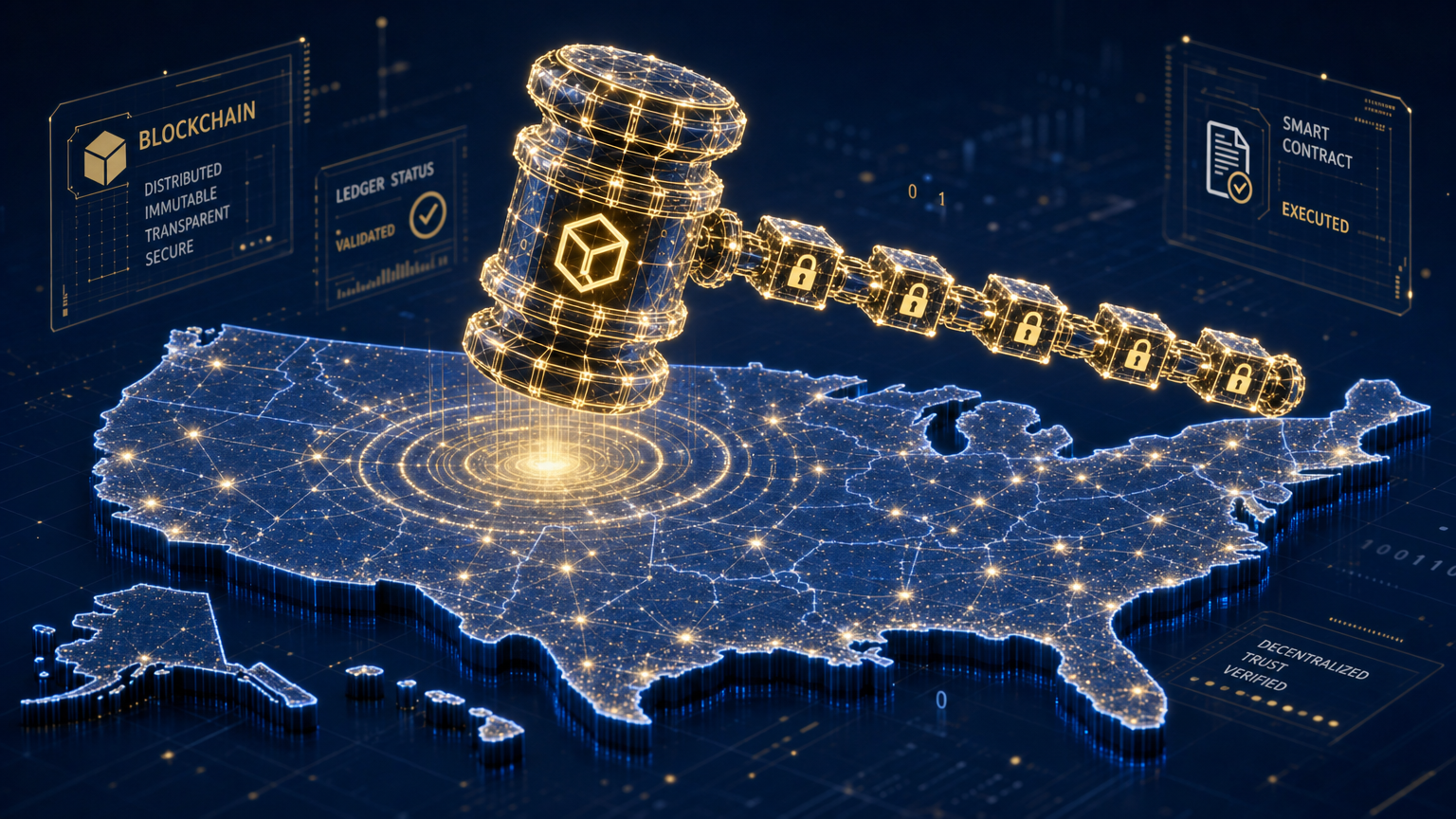
SEC Chairman Paul S. Atkins took the stage at the Solana Policy Institute Summit on Sept. 14 and used it to lay out what he described as a unified Washington-to-market agenda for digital assets. His remarks on “Washington x Wall Street” connected the SEC’s current work to President Trump’s stated priority of American financial leadership and spelled out, specifically, what the agency is doing and what it’s asking Congress to do.
The venue gave the speech a Solana framing. The substance was broader. Atkins said the SEC’s “Project Crypto” is an agency-wide effort to cement the United States as the “Crypto Capital of the World,” and his message carried a pointed either/or: “will we build the future of finance here in America and remain the global leader in crypto innovation, or will we surrender that ground to another nation? I, for one, am emphatically committed to the former—as is our President.”
The immediate legislative ask is the CLARITY Act. “The U.S. must and will lead the world in financial innovation,” Atkins said. “To do so, Congress should vote to advance the CLARITY Act and send it to the President’s desk as soon as possible.” No vote date, passage conditions, or bill text appear in the published remarks, so the timeline remains open while the direction stays clear.
The SEC’s proposed structure
Atkins named three initiatives and was explicit that they form one design, not three parallel rulemakings. First is “Regulation Crypto Assets,” described as a proposal to modernize federal securities regulation and give crypto projects clarity they haven’t had. “If adopted, this rule would finally give entrepreneurs what they have been denied for more than a decade: the certainty to raise capital in this country to fund their crypto projects using digital assets, without guessing at the law as they go,” he said.
The other two pieces cover market plumbing. The SEC proposed to modernize transfer-agent rules. Agency staff was separately asked to develop a proposal clarifying crypto-asset custody for investment advisers and regulated funds — that proposal doesn’t exist yet.
Atkins tied the package together directly: “Taken together, Regulation Crypto Assets, transfer agent modernization, and a sound crypto custody framework are not three isolated policy initiatives. They are three pillars of a single, rational, and comprehensive regulatory architecture for how crypto assets are issued, traded, transferred, and held under American law—the structural foundation upon which we at the SEC will continue to build.”
The remarks don’t specify which digital assets qualify under any of this, which custody conditions would apply, or when proposals move to final rules. Crypto projects seeking to raise capital sit in the securities-framework bucket; investment advisers and regulated funds are waiting on the custody proposal; transfer agents face their own separate rulemaking. Atkins is describing regulatory integration, not a Solana-specific carve-out — the summit venue doesn’t change that read.
Solana’s case for institutional use
The Solana Foundation’s account of its reliability work presents a network that has run at 100% uptime since February 2024, processes more daily transactions than all other major blockchains combined, and currently hosts $17.5 billion in stablecoins and more than $4 billion in real-world assets. The Solana Foundation supplied those figures; independent confirmation was not provided in the cited material.
The network’s performance roadmap calls for 300-millisecond slot times, with 200 milliseconds targeted next — a reduction of 100 milliseconds, or 33.3%. Alpenglow, a Solana mainnet release expected later this year, is slated to bring finality down to 150 milliseconds. Solana also recently recorded its first 5,000 sustained user transactions per second, and storage costs have been cut 90%.
None of that establishes how the SEC will eventually classify SOL or Solana-based assets legally.
The uptime claim also sits alongside a specific stress event: on Aug. 12, 29% of network stake went offline after a routing failure involving Solana’s largest infrastructure provider, even as blocks continued to be produced. Atkins discussed how assets are held under law; the foundation’s reliability account discusses how the chain keeps processing. Those are related questions, but they aren’t the same question.
Jacob Creech, VP of Technology at the Solana Foundation, addressed the track record directly: “It’s the result of years of being honest about our failures, quick to fix them, and focused always on making Solana the most reliable chain it can be.” He added: “A network that has never seen issues is a network that has never been proven.”
What changes for positions
At publication, SOL$110.66▼4.30% was priced at $100.99, down 0.7% over 24 hours, per CoinGecko. Whether that move reflects anything about Atkins’ remarks isn’t knowable from the price alone.
The practical consequences are procedural and conditional. Capital-raising clarity for crypto projects depends on “Regulation Crypto Assets” being adopted. Custody guidance for advisers and regulated funds depends on staff producing a proposal that doesn’t yet exist. The CLARITY Act depends on Congress. Holders of SOL have no new classification or custody rule from any of this — only a stated architecture, a legislative push, and a stack of proposals whose effects remain contingent on adoption and implementation.
Congress is the next named decision point, with no date attached.

Marcus Feld
Marcus Feld is CoinScoop's DeFi and on-chain analyst. He digs into L2 activity, stablecoin flows and protocol revenue, translating raw chain data into plain-English calls.