


SEC proposes taking direct control of the Consolidated Audit Trail
The SEC has proposed taking direct control of the Consolidated Audit Trail, replacing Rule 613 with Rule 17a-26 and shifting funding to Congressional appropriations.

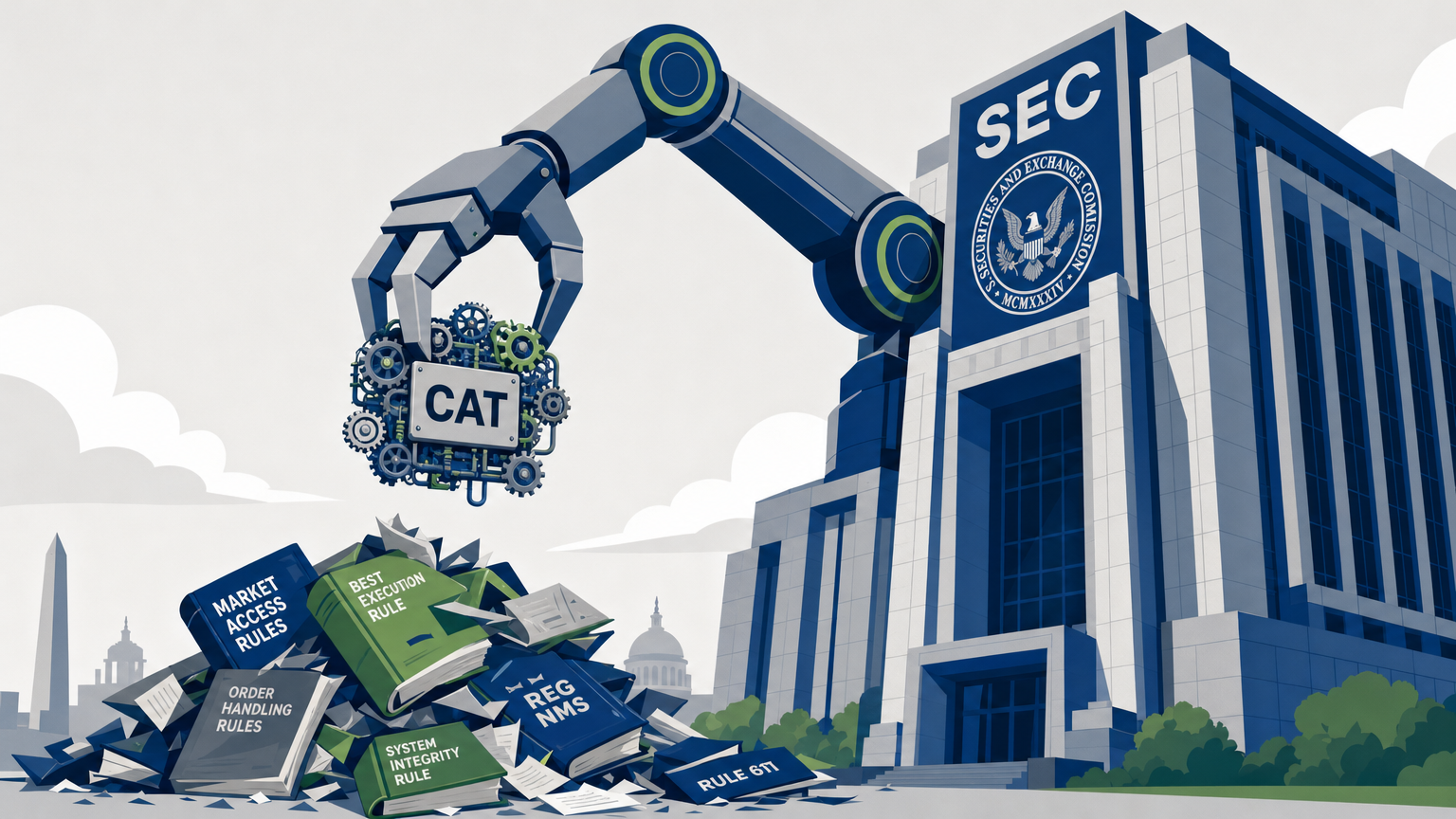
November 20, 2026. The SEC released a proposal to restructure the Consolidated Audit Trail’s existing governance and rebuild it under direct Commission control, moving away from the SRO-managed NMS arrangement that’s been running it since 2016. The SEC’s proposal would rescind Rule 613 of Regulation NMS entirely, replacing it with Rule 17a-26 under the Securities Exchange Act of 1934.
For trading firms, the data obligations don’t fundamentally change. SROs and broker-dealers would still report substantially the same information currently required under CAT — just to the Commission or its designee rather than through the SRO-managed NMS plan.
The CAT NMS plan approved in 2016 came with estimated annual operating costs of roughly $55 million. The figures underpin the SEC’s case for changing the CAT’s governance and funding model.
Congressional appropriations would replace the SRO-funded arrangement.
Chairman Paul S. Atkins said the proposal “addresses persistent concerns with cost overruns, funding, and governance of the Consolidated Audit Trail” and would put it “on a sustainable footing: accountable in its governance and disciplined in its costs, to the benefit of our markets and those who participate in them.” The SEC said the comprehensive review behind the proposal was directed by Atkins himself.
The rulemaking isn’t starting from zero. Recent exemptive relief and approved amendments have already cut projected annual CAT operating costs by over $100 million, and the reporting of personally identifiable information to the CAT has been permanently eliminated. Atkins said the proposed rule would fold both changes in.
Commissioner Uyeda put the funding logic plainly: “This proposal represents an important step toward improving regulatory efficiency and accountability by aligning responsibility for the CAT’s governance and funding with responsibility for its oversight and use,” he wrote, adding that “the Commission should be responsible for the costs of operating the regulatory infrastructure that it requires and relies upon.”
The groundwork stretched back several months before November. A Concept Release went out April 16, 2026, inviting public input; commenters in that record expressed support for the Commission taking more direct control. On March 27, 2026, the SEC had already approved an NMS plan amendment that contributed to the $100 million-plus reduction in projected annual operating costs.
For reporting entities, the picture is relatively clear at this stage — SROs and broker-dealers would continue supplying substantially the same data, while the SEC would assume proposed control and funding responsibility. The proposal remains subject to a 60-day comment period after Federal Register publication. What “substantially the same information” means precisely under Rule 17a-26, and how the operational transfer of CAT responsibility actually gets executed, remain open until that process closes.

Nadia Rahman
Nadia Rahman is CoinScoop's Markets Editor. She covers Bitcoin, macro liquidity and the spot-ETF complex, and previously reported on rates and FX for a global newswire.