Pakistan’s PVARA Chief Seeks Separate Shariah and Technical Reviews After Mufti Taqi Usmani Rejects Crypto Payments
Pakistan's crypto regulator PVARA pushes back on Mufti Taqi Usmani's ruling rejecting USDT and crypto payments, calling for separate technical and Shariah reviews.

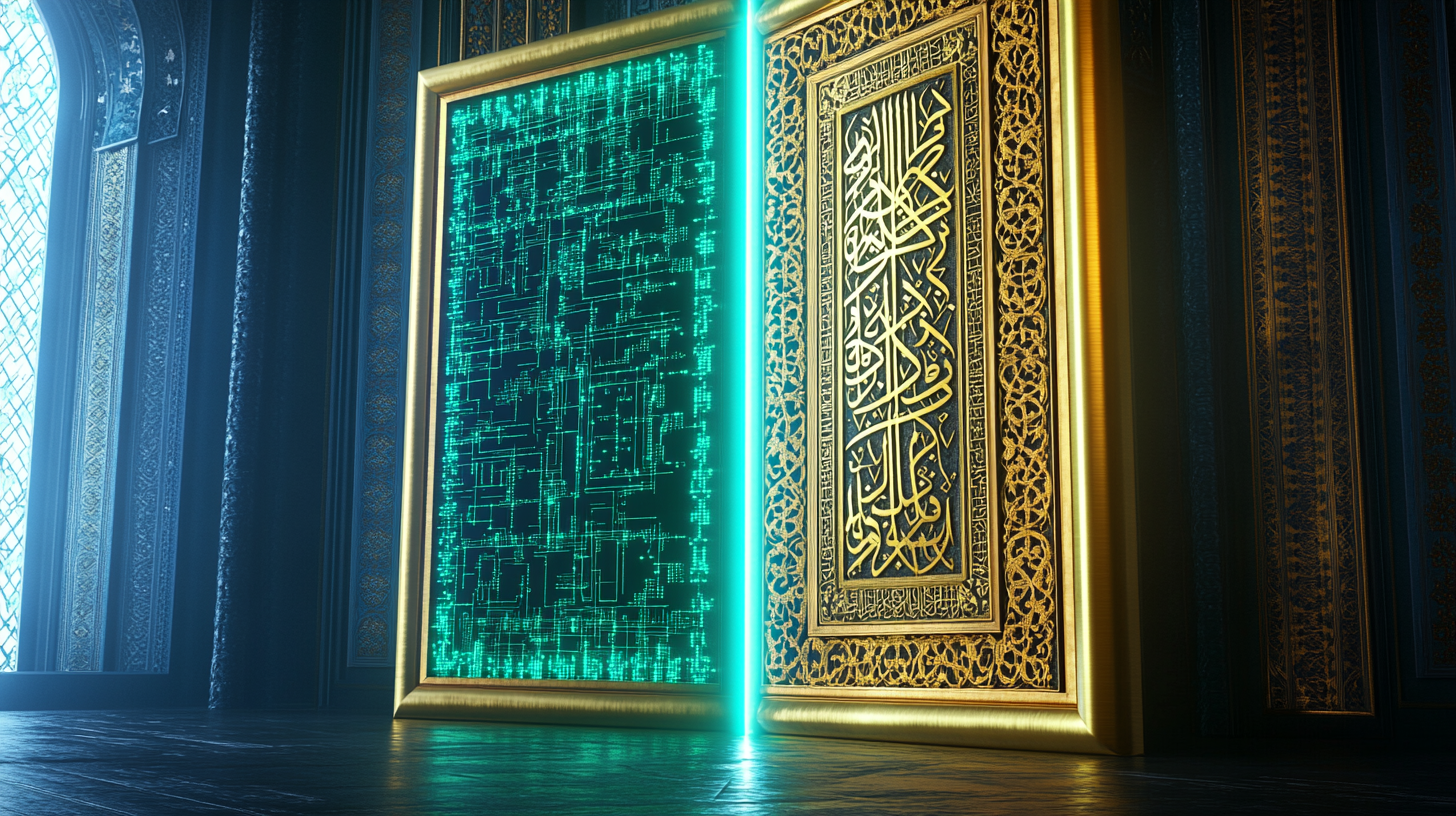
Pakistan’s top crypto regulator is pushing back against a blanket religious ban on digital assets, calling for separate technical and Shariah reviews after one of the country’s most prominent Islamic scholars ruled that cryptocurrency — including UUSDT$1.0000▲0.04%‘s USDT — is impermissible as a payment method.
Bilal bin Saqib, chairman of the Pakistan Virtual Assets Regulatory Authority (PVARA) and State Minister for Crypto and Digital Assets, met directly with the scholar behind the ruling and urged continued dialogue rather than a single broad prohibition, according to CoinTelegraph. That scholar is Mufti Taqi Usmani — a widely respected Islamic finance authority — who specifically rejected crypto as a permissible payment method and named USDT by name in his objection, crypto.news reported.
Usmani’s core objection is speculation. Digital currencies like BBTC$81,081.00▲4.30% are used primarily for speculative trading rather than as a genuine medium of exchange, which in his reading makes them impermissible under Islamic finance rules, according to Pak Observer. The framing is precise: Islamic finance prohibits gharar — excessive uncertainty — and maisir, or gambling. Critics of crypto have long argued both apply to volatile digital assets, and Usmani’s ruling gives that argument formal religious weight.
Saqib’s counterargument is structural. Blockchain technology itself should be evaluated separately from specific digital asset use cases, he contends, and a single ruling sweeping across every crypto asset is too broad to be workable, Arab News reported. The logic is hard to dismiss. A stablecoin engineered to track the U.S. dollar at a fixed peg raises fundamentally different religious questions than a token whose price swings 50% in a week. Lumping them together, Saqib’s camp argues, produces a ruling that fits neither.
The stakes around USDT specifically are commercially significant. Tether’s stablecoin is the world’s largest by market capitalisation — $184.2 billion, with a 24-hour trading volume of $28.97 billion. In Pakistan, it functions as a workhorse: remittances, trading pairs, cross-border transfers. A blanket prohibition that catches USDT in the same net as speculative altcoins would sever one of the most liquid entry points in the country’s informal crypto economy.
The broader market is offering no cover. Total crypto market cap sits at $2,285.91 billion, down 0.35% over the past 24 hours. The Fear & Greed Index reads 26 out of 100 — deep in “Fear” territory. Bitcoin is at $64,083. EETH$2,509.17▲4.25% at $1,814. Nobody is feeling bold right now. That environment only sharpens Usmani’s speculative critique: when prices are sliding and sentiment is negative, the case that crypto is gambling rather than commerce becomes easier to make, even for observers with no religious stake in the argument.
A Structural Tension
The tension between PVARA’s regulatory agenda and Pakistan’s Islamic finance framework is structural, not incidental. A substantial share of the country’s banking system operates under Shariah principles. Any crypto framework that fails to secure religious approval will hit adoption barriers that no legislation can clear. Saqib’s decision to sit down with Usmani directly signals that PVARA treats Shariah compliance as a prerequisite for a viable digital asset regime — not a box to tick after the rules are written.
What PVARA wants is a process, not a fatwa. The agency is pushing for a two-stage review: technical assessment of the underlying technology first, Shariah evaluation of specific use cases second. That approach would let regulators argue that dollar-pegged stablecoins deserve a different religious verdict than meme coins with no underlying asset and no function beyond speculation. It’s a reasonable distinction. Whether Pakistan’s religious establishment accepts it is another question entirely.
What Comes Next
Everything hinges on Usmani. If he and other scholars accept the framework for separate, asset-by-asset reviews, Pakistan could end up with a tiered system — certain assets cleared, others prohibited. That would be a workable outcome. If they refuse, PVARA faces the prospect of constructing a regulated virtual-asset sector that the country’s religious establishment has already rejected before it opens for business. No amount of technical nuance solves that problem.
The next concrete marker is whether PVARA formalises its call for separate reviews in a published regulatory framework, and whether Usmani or his peers respond publicly to the proposal.

Nadia Rahman
Nadia Rahman is CoinScoop's Markets Editor. She covers Bitcoin, macro liquidity and the spot-ETF complex, and previously reported on rates and FX for a global newswire.