Final Clarity Act draft adds Trump-backed crypto ethics rules
Senate Republicans' final Digital Asset Market Clarity Act draft includes Trump-backed ethics rules for officials' crypto dealings and stablecoin limits, ahead of a procedural vote.

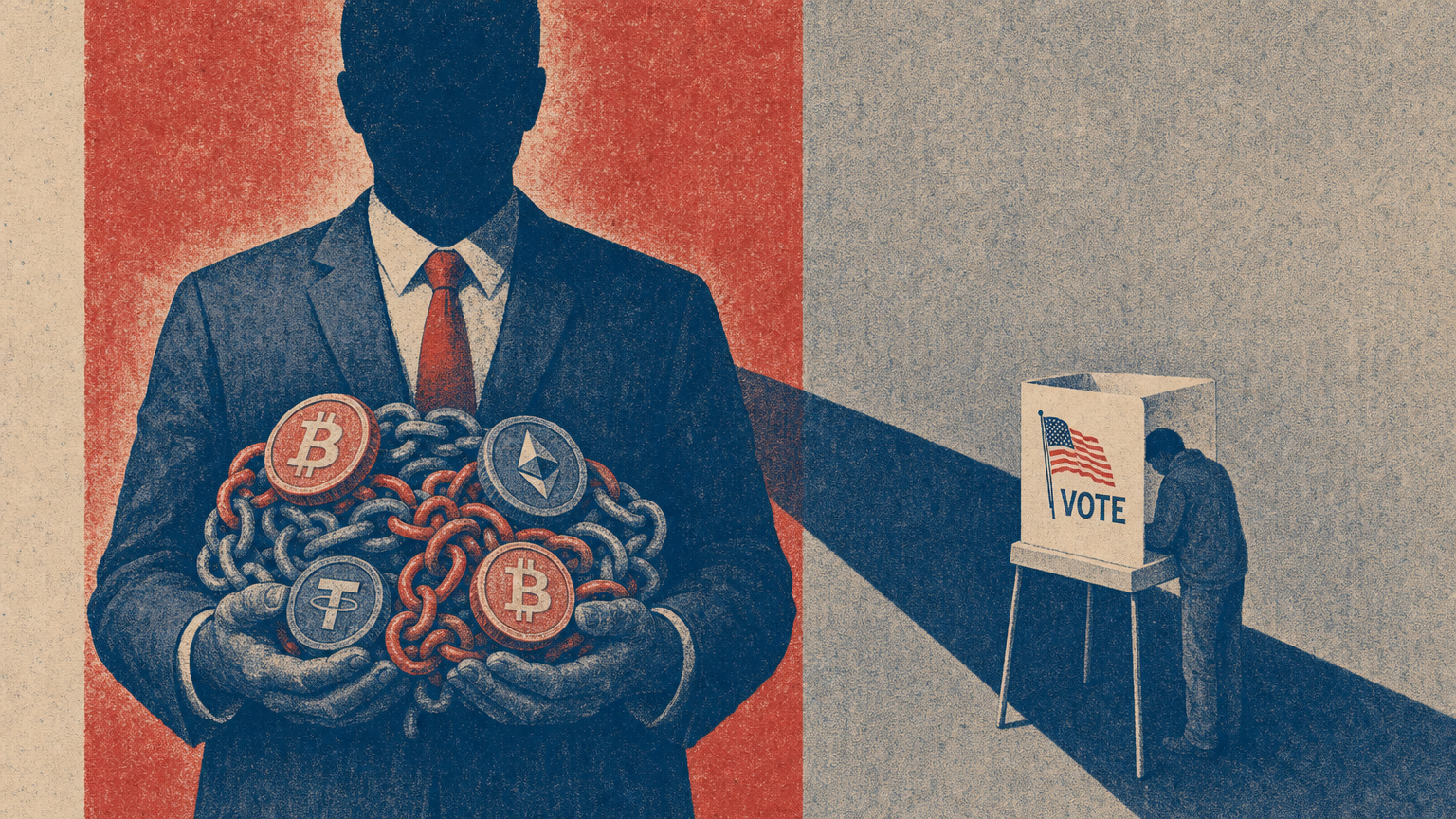
President Donald Trump agreed to ethics restrictions attached to the final Republican draft of the Digital Asset Market Clarity Act, a concession that Senate Republicans are presenting as a path toward bipartisan support. The released draft and its reported changes arrive before a procedural Senate vote scheduled for Tuesday, Sept. 15.
Senate Republicans described the proposal as the final draft of H.R. 3633 after more than a year of negotiations. The revised version incorporates 126 “substantive changes” requested by Democrats and reflects most of the Tillis-Gallego ethics proposal, according to The Block’s report on the release.
The political concession is direct. Sen. Cynthia Lummis said President Trump “voluntarily agreed to unprecedented ethics restrictions, holding every federally elected official, judge, and their spouses to some of the toughest ethics restrictions in U.S. history.” She added: “Democrats got what they wanted; now they need to take yes for an answer.”
The ethics rules would cover public officials and employees, people elected as president, vice president or members of Congress, and their spouses. The bill does not state limits on other family members, including an official’s children. That leaves the scope of the restrictions narrower than a rule covering an official’s entire family.
The revised bill would allow state attorneys general to enforce bans on covered federal officials issuing, sponsoring or holding significant financial interests in digital assets, according to Cointelegraph’s report on the 635-page proposal. Covered individuals would have to divest those significant interests or place them in a qualified blind trust.
The financial exposure is specified. A violation would carry a civil penalty of $500,000 or 20% of the amount received in the prohibited transaction, whichever is greater. The ethics provisions would take effect 360 days after enactment, or earlier if implementing regulations are finalized.
For officials and their spouses holding significant digital-asset positions, the consequence is a forced choice between divestment, a qualified blind trust or exposure to that penalty once the ethics rules take effect. For digital-asset issuers and sponsors, the restrictions target direct involvement by covered federal officials in issuing or sponsoring assets.
The draft also changes the stablecoin economics that exchanges, issuers and bank counterparties would have to model. It limits platforms from paying interest on idle stablecoin holdings, while continuing to allow rewards tied to stablecoin usage. The Treasury secretary could impose a circuit-breaker on stablecoin rewards to limit deposit outflows from community banks.
That circuit-breaker would last 18 months after enactment. Rob Nichols, president and CEO of the American Bankers Association, said bankers and bank customers used the August recess to argue that local deposits support lending in communities. The association is encouraged that more senators recognize the need to address the bill’s “stablecoin interest loophole,” Nichols said.
The trade-off is visible in the text described by the two reports: rewards linked to usage remain available, while interest on idle balances can be restricted and the Treasury secretary receives temporary authority to halt rewards. Stablecoin platforms therefore face a distinction between payments designed to drive use and returns paid simply for holding balances.
The bill also revises the Blockchain Regulatory Certainty Act. The changes would narrow money-transmission registration for certain software developers and add a civil safe harbor. The revised BRCA would retain protections against treating developers as money transmitters or financial institutions under the Bank Secrecy Act, while extending those protections to miners and validators.
The proposal would also remove references to Section 1960 of Title 18 of the U.S. Code, which concerns the prohibition of unlicensed money-transmitting businesses. Separately, the bill would impose Agriculture Committee guardrails on affiliate trading and conflicts of interest, and clarify when or how state consumer-protection laws apply.
The immediate arithmetic remains difficult for Republicans. The procedural vote requires 60 senators, while Republicans hold 53 seats. That leaves a seven-vote gap: 60 required minus 53 Republican seats equals 7 senators from outside the Republican caucus needed to reach the threshold.
Patrick Witt, executive director of the White House Council of Advisors for Digital Assets, said: “After more than a year’s worth of negotiations, it’s time to pass this bipartisan bill.” Lummis said: “After a year of intense daily bipartisan negotiations, this bill is ready.”
The next deadline is the Sept. 15 procedural vote. If the bill clears that threshold, the ethics provisions become part of the broader negotiation over market structure, stablecoin rewards and state enforcement. If it does not, the 360-day ethics clock never starts because it runs only after enactment.
Timing beyond the vote is also constrained. The Senate’s tentative 2026 schedule shows a state work period beginning Oct. 5, with Election Day on Nov. 3, while House leaders canceled the weeks of Sept. 21 and Sept. 28. The fact sheet does not establish whether the proposal will pass both chambers before those dates.
For tokenized-asset issuers and digital securities platforms, the relevant change is the combination of market-structure rules with restrictions on political participation in digital assets. Officials and spouses with significant holdings face divestment or blind-trust requirements; stablecoin platforms face limits on idle-balance interest and a possible 18-month rewards circuit-breaker; developers, miners and validators would receive specified protections under the revised BRCA.

Nadia Rahman
Nadia Rahman is CoinScoop's Markets Editor. She covers Bitcoin, macro liquidity and the spot-ETF complex, and previously reported on rates and FX for a global newswire.